If your child speaks Mandarin, Cantonese or another language at home, you might wonder how they’ll manage in an English-speaking early learning centre. How will they ask for help? Will they make friends? And is it better to start sooner? Look for a centre where your child will have a trusted teacher, plenty of opportunities to talk and play, and support to use the language they already know.
When to start early learning
If you’ve found a centre that feels right and the timing works for your family, starting sooner can give your child more time to hear and use English before school. Toddlers can begin to connect words with familiar experiences such as washing their hands, sharing a snack or asking for another turn. Children starting at three or four can also make meaningful progress through play, friendships and conversations with teachers.
There’s no single best starting age. Regular opportunities to understand and use English in ways that matter to your child are worth looking for at any age. Your child can start at Ponderosa before they speak any English.
Five questions to take on a centre visit
Ask the centre: Who will help my child settle?
What to look for: A teacher who will get to know your child and ask what helps them feel comfortable.
Ask the centre: Does anyone speak my child’s home language?
What to look for: Find out who speaks the language your child uses and when they’ll be there on your booked days.
Ask the centre: How many children and teachers are usually together?
What to look for: Ask about actual group size and the number of teachers working with children during your child’s hours. Watch for individual and small-group conversations.
Ask the centre: How will my child learn English and join in?
What to look for: Watch how teachers invite children into play, put words to what’s happening and give children time to respond.
Ask the centre: How will I hear about progress?
What to look for: Look for specific examples of what your child understands, how they join in and what words or phrases they’re starting to use.
Learning English at Magic Garden Ponderosa
At Magic Garden Ponderosa in Oteha, we welcome children from 18 months. English is the main language we use throughout the day, and two of our four teachers speak both Mandarin and English. We currently have fewer than 15 children in the group, which gives teachers more time to get to know each child and talk with them individually or in small groups.
A Mandarin speaking key teacher
At Ponderosa, we assign children from Mandarin-speaking families a key teacher who speaks Mandarin and English. Your child has a familiar person to turn to while they settle, and you can share concerns, tell us what helps at home and talk about your child’s wellbeing and learning in Mandarin. If your family speaks Cantonese or another language, tell us what your child uses at home so we can talk through the support available.
Settling in and communicating everyday needs
We work with you on an unhurried transition that suits your child. Teachers learn how your child communicates and pay attention to gestures, facial expressions and body language. If your child points to their drink bottle, for example, we can respond straight away and model a simple phrase like “water, please”. Pictures, gestures and familiar routines help children understand what’s happening around them.
Making friends through play
Children can build a tower together, share paint or dig alongside a friend at the sandpit before they have the English words for what they’re doing. A teacher might use a familiar Mandarin phrase to help your child join in, then model “my turn” as the children take turns with a spade.
How we teach English and early literacy
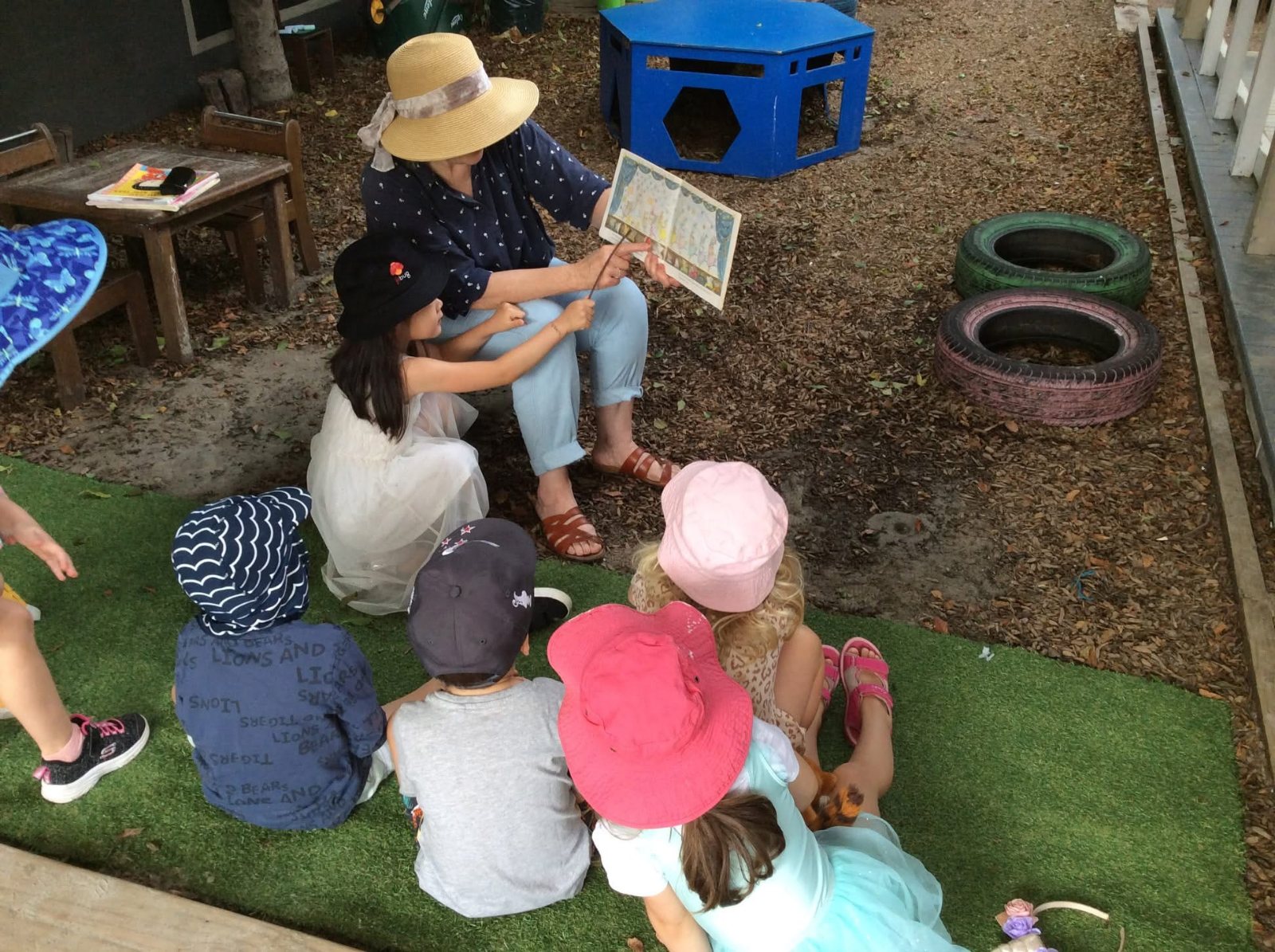
We teach English intentionally through play, stories, songs and daily routines. Teachers name what children are doing, introduce useful words and phrases, and give children time to respond. A child who says “truck” might hear “Yes, the red truck is carrying sand.” Shared books build vocabulary, rhymes and songs help children listen for sounds in words, and drawing and mark-making build early writing skills. Children also meet letters in meaningful places, such as their name or the title of a favourite book.
Progress at home and before school
How long English takes to develop
Every child’s pace is different. Your child may understand much more than they can say at first. We look for signs such as following familiar instructions, joining in with a song, responding to a friend or using a new word during play. We share specific examples through conversations with you and learning stories, so you can see how their understanding, confidence and spoken English are growing.
The language to speak at home
Keep using the language that comes most naturally to your family. Chats at mealtimes, stories with grandparents and jokes in Mandarin or Cantonese all help your child build vocabulary and express their ideas. You can support their transition by sharing a few familiar words, songs or routines with their teachers.
Getting ready for primary school
Before school, we help children practise the English they can use in everyday situations, such as asking for help, following an instruction, joining a game and explaining an idea. We build these skills alongside listening, independence, friendships and confidence. If school is coming up, ask us what your child is already doing comfortably and what we can practise next.
Visit Magic Garden Ponderosa
Come with your child and see how our teachers talk and play with children. Tell us which days you’re considering and what language you use at home. We can talk about teacher availability and plan what your child’s first visits might look like.
Arrange a visit to Magic Garden Ponderosa
3 Ponderosa Drive, Oteha · 09 476 1240
Further reading
Ministry of Education | Supporting bilingual and multilingual learning pathways
Education Review Office | Good practice in early oral language development
National Academies | The development of English language learners
OECD | Early learning group size and staffing
Questions parents often ask
Will my child learn English faster if they start younger?
Starting younger can give your child more time to hear and use English before school. How quickly they progress varies. At any age, look for a centre that gives your child regular chances to talk, play and build relationships.
Can my child start if they speak no English at all?
Yes. We’ll plan settling-in visits with you and learn how your child shows us when they need help or comfort. If they point to their drink bottle, we can give it to them and model the words “water, please”.
Will a Mandarin-speaking teacher be there every day?
At Ponderosa, we assign children from Mandarin-speaking families a key teacher who speaks Mandarin and English. Tell us which days you’re considering and we can explain when that teacher is usually there and how the rest of the team will support your child.
What if my child understands English but rarely speaks it?
Some children begin by watching, listening or responding with gestures. We give them time to reply and share what we’re seeing, such as following a new instruction, joining a game or trying a phrase with a friend. Tell us what they’re saying at home too.
Should we practise English at home?
Keep talking, reading and telling stories in the language that comes naturally to your family. If your child comes home singing an English song or using a new word, you can join in and ask them to show you where they heard it.
Will my child learn letters and sounds?
We build these skills into everyday experiences. Children might spot the first letter of their name, hear which words rhyme in a song or make a sign for something they’ve built. Shared books and conversations help build vocabulary.
What if my child is still learning English when school starts?
Talk with us and your child’s new teacher about what your child understands, how they ask for help and what helps them join in. Before school, we can practise useful phrases together, such as “Can I play?” or “Can you help me?”
孩子正在学英语,怎样选择幼教中心?
如果孩子在家说普通话、粤语或其他语言,您可能会担心:到了以英语为主的幼教中心,孩子怎么开口求助?能交到朋友吗?是不是越早入园越好?参观时,可以留意中心能否让孩子有一位信赖的老师,有充足的机会交流和游戏,也能在需要时使用自己熟悉的语言。
什么时候入园合适?
如果找到了适合孩子的中心,家里的安排也合适,早一点入园,可以让孩子在上小学前有更多时间接触和使用英语。年幼的孩子可以在洗手、一起吃点心、等着再玩一轮等熟悉的情境中,把听到的词和正在做的事联系起来。三四岁才入园的孩子,也可以通过游戏、交朋友和与老师交流,逐步提高英语水平。
每个孩子合适的入园时间都不同。无论几岁开始,都可以看看中心能否经常创造机会,让孩子在自己感兴趣的活动中听懂并用上英语。即使孩子还完全不会说英语,也可以入读 Ponderosa。
参观幼教中心时可以问的五个问题
可以问中心什么?谁会帮助孩子适应?
参观时留意什么?老师会主动了解孩子,并问您怎样能让孩子觉得安心。
有老师会说孩子在家用的语言吗?
了解哪位老师会说这种语言,以及孩子入园的日子里这位老师通常什么时候在园。
平时一个班组有多少孩子和老师?
问问孩子在园时实际有多少孩子、多少老师直接照顾和带领他们,并留意一对一或小组交流的机会。
老师怎样帮助孩子学英语和参与活动?
看看老师怎样邀请孩子一起玩、用英语描述正在发生的事,并留出时间让孩子回应。
我怎样了解孩子的进步?
老师能举出具体例子,说说孩子听懂了什么、怎样参与活动、开始用了哪些词或短句。
在 Magic Garden Ponderosa 学英语
我们位于 Oteha 的 Magic Garden Ponderosa 招收年满 18 个月的孩子。中心日常以英语为主,四位老师中有两位会说普通话和英语。目前这个班组不到 15 个孩子,老师有更多时间了解每个孩子,并与他们一对一或在小组里交流。
会说普通话的专属老师
在 Ponderosa,我
们会为说普通话家庭的孩子安排一位会说普通话和英语的专属老师(key teacher)。适应期间,孩子有一位熟悉的老师可以依靠。您也可以用普通话和老师交流,告诉我们孩子在家有哪些习惯、怎样安抚最有效,以及您对孩子在园生活和学习的关心。如果您家说粤语或其他语言,也欢迎告诉我们孩子平时使用什么语言,我们可以一起商量怎样支持他们。
适应新环境,表达日常需要
我们会和您一起安排适合孩子的入园适应过程,按孩子的节奏慢慢来。老师会了解孩子平时怎样表达自己,并留意他们的手势、表情和肢体动作。比如,孩子指着水壶时,老师可以马上递给他们,同时示范一句简单的英语:“Water, please.”(请给我水。)图片、手势和熟悉的日常流程也能帮助孩子理解接下来要做什么。
在游戏中交朋友
孩子还不会用英语说出自己在做什么时,就可以一起搭积木、分享颜料,或和伙伴在沙坑里挖沙。老师可以先用一句孩子听得懂的普通话帮他们加入游戏,再在孩子们轮流用铲子时示范 “My turn.”(轮到我了。)
我们怎样教英语和培养早期读写能力
老师会有意识地把英语学习融入游戏、故事、歌曲和日常活动中。他们会用英语说出孩子正在做的事,介绍实用的词和短句,并留出时间让孩子回应。比如,孩子说 “truck”(卡车),老师可以接着说 “Yes, the red truck is carrying sand.”(对,红色的卡车在运沙。)一起读书能丰富词汇,儿歌和押韵游戏能帮助孩子留意词语里的声音,画画和涂画则为日后书写打基础。孩子也会在自己的名字或喜欢的书名里认识字母。
英语进步、家庭语言与入学准备
孩子多久能开口说英语?
每个孩子的进度都不同。刚开始,孩子听懂的往往比能说出来的多。我们会留意孩子是否听懂了熟悉的指令、开始跟着唱歌、回应同伴,或在游戏中用了一个新词。老师会通过日常交流和学习故事记录,与您分享具体例子,让您看到孩子的理解能力、自信心和英语口语怎样逐步发展。
在家说什么语言?
继续使用家里说起来最自然的语言。用普通话或粤语在饭桌上聊天、听爷爷奶奶或外公外婆讲故事、一起开玩笑,都能帮助孩子丰富词汇、表达想法。您也可以把孩子熟悉的词语、歌曲或生活习惯告诉老师,帮助孩子顺利适应。
为上小学做准备
入学前,我们会帮助孩子练习日常用得上的英语,例如开口求助、听懂指令、加入游戏或解释自己的想法。我们也会培养他们的倾听能力、独立性和自信心,并帮助他们和同伴相处。如果孩子快上小学了,欢迎问我们他们已经能自在地做些什么,接下来可以一起练习什么。
欢迎参观 Magic Garden Ponderosa
欢迎带孩子来看看老师平时怎样和孩子说话、一起玩。您可以告诉我们打算哪几天送孩子来,以及家里使用什么语言。我们可以一起了解老师通常在哪些时段在园,并商量最初几次适应性到访怎样安排。
地址:3 Ponderosa Drive, Oteha | 电话:09 476 1240
延伸阅读
家长常见问题
是不是越早入园,英语就学得越快?
早一点入园,孩子在上小学前就有更多时间听和用英语。学习速度因人而异。无论几岁开始,都可以找一个让孩子经常有机会交流、游戏和与人建立关系的中心。
孩子完全不会说英语,也能入园吗?
可以。我们会和您一起安排适应性到访,并了解孩子平时怎样表达需要帮助或安慰。比如,孩子指着水壶时,我们可以把水递给他们,同时示范 “Water, please.”(请给我水。)
每天都会有会说普通话的老师吗?
Ponderosa 会为说普通话家庭的孩子安排一位会说普通话和英语的专属老师。告诉我们您考虑哪几天入园,我们可以说明这位老师通常什么时候在园,以及其他老师会怎样支持孩子。
孩子听得懂英语,却很少开口,怎么办?
有些孩子会先观察、听别人说,或用手势回应。我们会给他们时间,并和您分享观察到的变化,例如听懂了一个新指令、开始参与游戏,或试着用英语和朋友说一句话。也欢迎您告诉我们孩子在家说些什么。
我们需要在家练习英语吗?
请继续用家里最自然的语言聊天、阅读和讲故事。如果孩子回家唱起一首英文歌,或说了一个新单词,您可以跟着唱,或者请孩子说说是在哪儿听到的。
孩子会学英文字母和发音吗?
我们把这些学习融入日常活动。孩子可能会认出自己名字的第一个字母,听出儿歌里哪些词押韵,或为自己搭好的作品做一块小牌子。一起看书和聊天也能帮助他们积累词汇。
如果上小学时孩子还在学英语,怎么办?
您可以和我们以及孩子的小学老师谈谈,孩子已经能听懂什么、怎样求助,什么方法能帮助他们参与活动。入学前,我们可以一起练习实用的句子,比如 “Can I play?”(我可以一起玩吗?)或 “Can you help me?”(你能帮我吗?)